 By Editorial Team
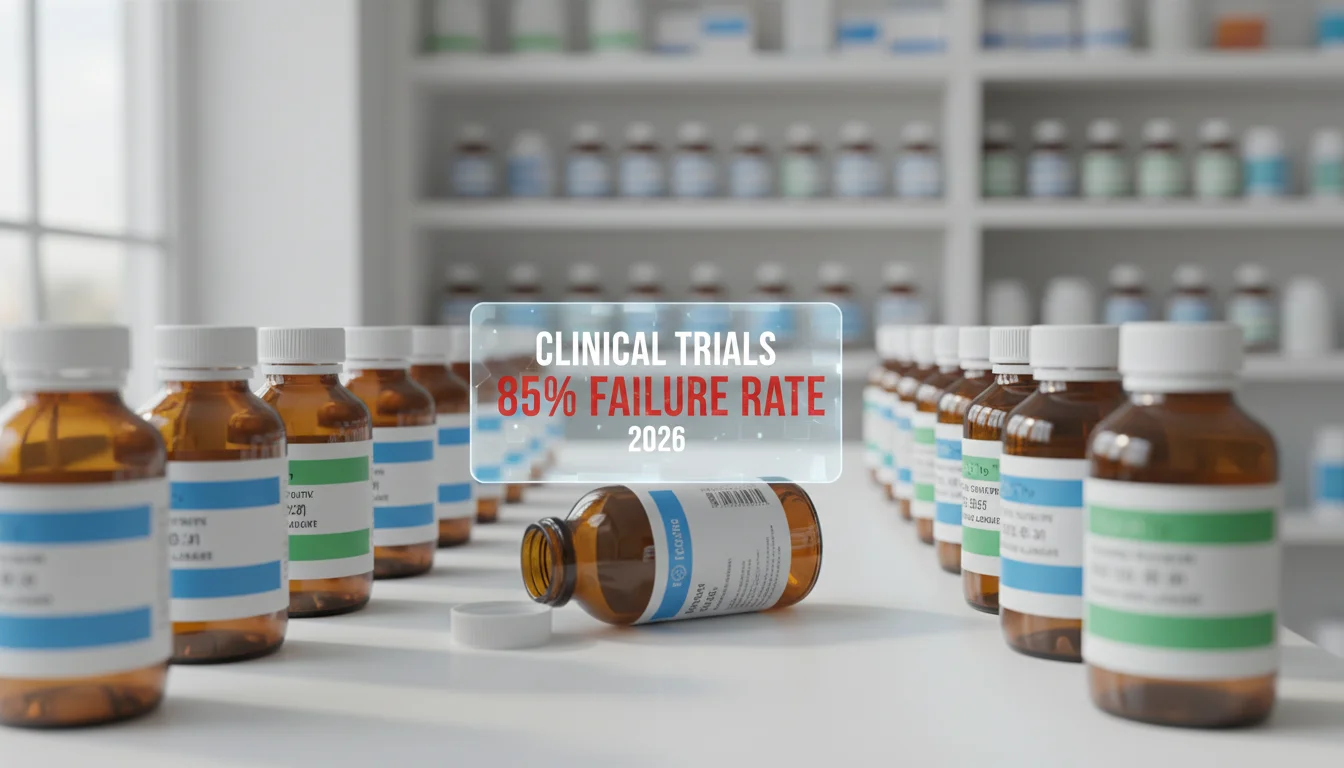
A staggering 85% of clinical trials fail to meet their patient enrollment targets, significantly delaying the introduction of new treatments and impacting global health initiatives. Understanding the nuances of these clinical research findings, from patient recruitment hurdles to the implications of data analysis, is paramount for anyone invested in the future of medicine. How can expert analysis truly illuminate the path forward in a field defined by rigorous scientific inquiry and complex regulatory field?
Key Takeaways
- Only 15% of clinical trials meet their initial patient enrollment goals, directly extending research timelines and increasing development costs.
- The average cost to bring a new drug to market exceeds $2.6 billion, with a substantial portion attributed to trial failures and extensions.
- Digital health technologies, including AI-driven patient matching, can reduce trial recruitment times by up to 30%, improving efficiency.
- Regulatory approval processes for novel therapies often take an average of 10 to 12 months post-trial completion, requiring careful documentation.
- Real-world evidence (RWE) is increasingly influencing post-market surveillance and label expansion, complementing traditional randomized controlled trials.
The Persistent Challenge of Patient Enrollment: A 2026 Perspective
The statistic remains stubbornly high: 85% of clinical trials do not meet their patient enrollment targets. This isn’t a new problem, but its implications in 2026 are more deep than ever. According to a 2025 report from the National Institutes of Health (NIH) ClinicalTrials.gov database, the primary reasons for this shortfall include overly stringent inclusion/exclusion criteria, geographic limitations for participants, and a lack of awareness among potential patients and referring physicians. We see this play out across therapeutic areas, from oncology trials seeking specific genetic markers to rare disease studies where patient populations are inherently small. My own experience in reviewing trial protocols shows that many sponsors still underestimate the logistical complexities of finding and retaining eligible participants, even with advanced outreach tools.
Consider the impact: a trial designed for 100 patients, struggling to enroll 50, faces significant delays. These delays don’t just push back approval dates. They consume additional resources, increase operational costs, and, most critically, postpone access to potentially life-saving treatments for patients awaiting them. The financial burden is immense, often adding millions to a study’s budget. This isn’t merely an administrative hiccup. It’s a fundamental barrier to progress. The industry’s reliance on traditional recruitment models, despite technological advancements, remains a critical vulnerability. We have the data. We know the problem. The question becomes, why aren’t solutions being adopted more aggressively?
The Escalating Cost of Drug Development: Beyond the Billion-Dollar Mark
Bringing a new drug to market now averages well over $2.6 billion, a figure that continues to climb. This isn’t just the cost of laboratory research. A significant portion of this expenditure is directly tied to the clinical trial phase. According to a recent analysis by the Pharmaceutical Research and Manufacturers of America (PhRMA), factors such as extended trial durations due to enrollment issues, increasing regulatory complexity, and the sheer volume of data collection and analysis contribute substantially to this figure. Each phase of clinical development, from Phase 1 safety studies to large-scale Phase 3 efficacy trials, demands immense investment in personnel, facilities, and oversight.
The financial pressure on pharmaceutical companies is real, and it directly influences decisions about which diseases to target and which research pathways to pursue. Orphan drugs, for example, often face higher per-patient costs due to smaller, more dispersed patient populations, yet they are critical for rare disease communities. This economic reality means that even promising compounds may never reach patients if the projected development costs are too high or the likelihood of trial success too low. It’s a high-stakes gamble, where the return on investment must justify the monumental outlay. The increasing scrutiny from payers and healthcare systems also means that demonstrating clear value, not just efficacy, is non-negotiable.
““President Trump’s direction for me in this role, should I be confirmed, is to ‘go fast.’ Slow and prohibitive requirements for cutting edge therapies at the FDA means investment is increasingly flowing to China who has found ways to do things faster and cheaper.””
Digital Health Technologies: A Glimmer of Hope for Recruitment Efficiency
While patient enrollment remains a significant hurdle, digital health technologies offer tangible improvements. Studies show that integrating tools like AI-driven patient matching algorithms and decentralized trial models can reduce recruitment times by up to 30%. For instance, a 2025 white paper from the FDA’s Digital Health Center of Excellence highlighted several case studies where virtual screening platforms and remote monitoring devices drastically expanded the geographic reach of trials and simplified participant engagement. These platforms can analyze vast datasets of electronic health records (EHRs) to identify potential candidates based on complex criteria, flagging them for further screening by site staff.
Plus, the rise of decentralized clinical trials (DCTs), facilitated by wearable sensors, telemedicine consultations, and home-based drug delivery, is fundamentally changing how studies are conducted. Patients no longer need to travel long distances to a central research site for every visit, reducing the burden on their time and resources. This flexibility broadens the pool of eligible participants, making trials more accessible to diverse populations and those in rural areas. We’re seeing a shift from a site-centric model to a patient-centric one, which, frankly, is long overdue. While implementation challenges exist, particularly around data security and regulatory compliance for novel technologies, the benefits in terms of speed and patient engagement are undeniable.
Working through the Regulatory Labyrinth: Post-Trial Approval Timelines
Even after successful clinical trials conclude, the journey to market is far from over. Regulatory approval for novel therapies typically takes an average of 10 to 12 months post-trial completion. This period involves careful review by agencies like the U.S. Food and Drug Administration (FDA), the European Medicines Agency (EMA), or Japan’s Pharmaceuticals and Medical Devices Agency (PMDA). The submission of a New Drug Application (NDA) or Biologics License Application (BLA) involves thousands of pages of data, requiring extensive internal review and external scrutiny. Any deficiencies or requests for additional information can further extend these timelines.
This phase is not a mere formality. It’s a critical safety net. Regulators scrutinize every piece of data, every statistical analysis, and every manufacturing detail to ensure the product is safe, effective, and produced to the highest quality standards. My observations suggest that companies that engage with regulatory bodies early and often, especially through breakthrough therapy designations or fast-track programs, can sometimes expedite this process. However, even with these accelerated pathways, the core requirements for demonstrating safety and efficacy remain stringent. The public health imperative dictates a thorough review, even if it adds months to market entry. There is no shortcut to patient safety.
Real-World Evidence: Reshaping Post-Market Surveillance and Label Expansion
The conventional wisdom has always held that randomized controlled trials (RCTs) are the gold standard, and rightly so, for establishing efficacy and safety in a controlled environment. However, there’s a growing recognition that real-world evidence (RWE) is increasingly influencing post-market surveillance and even label expansion. A 2024 guidance document from the FDA explicitly detailed how data derived from electronic health records, claims data, patient registries, and wearable devices can provide valuable insights into a drug’s performance in broader, more diverse patient populations. This isn’t about replacing RCTs. It’s about complementing them.
Where I disagree with the conventional wisdom is the notion that RWE is merely for “post-marketing.” We’re seeing RWE being used earlier in the development lifecycle to inform trial design, identify patient subgroups, and even generate synthetic control arms in rare disease studies. The sheer volume and granularity of real-world data can reveal nuanced benefits or risks that might not emerge in a highly controlled trial environment. For example, a drug might perform differently in patients with multiple comorbidities or those on complex polypharmacy regimens, scenarios often excluded from initial clinical trials. Using this data effectively requires advanced analytical capabilities and a deep understanding of its limitations, but its potential to accelerate understanding and optimize patient care is undeniable. It’s about moving beyond theoretical efficacy to practical effectiveness.
The field of clinical research is dynamic, marked by both persistent challenges and far-reaching innovations. Embracing digital solutions and strategically using real-world evidence will be critical for accelerating drug development and bringing life-changing therapies to patients more efficiently.
What is the primary challenge in clinical trials today?
The primary challenge remains patient enrollment, with 85% of clinical trials failing to meet their recruitment targets, leading to significant delays and increased costs.
How much does it cost to develop a new drug?
The average cost to bring a new drug to market now exceeds $2.6 billion, largely due to extensive research, development, and clinical trial expenses.
Can digital health technologies improve clinical trial efficiency?
Yes, digital health technologies like AI-driven patient matching and decentralized trial models can reduce recruitment times by up to 30% and expand patient access.
What is the typical timeline for regulatory approval after a clinical trial?
Regulatory approval processes, such as those by the FDA or EMA, typically take 10 to 12 months after the successful completion of clinical trials.
How is real-world evidence (RWE) impacting drug development?
Real-world evidence (RWE) is increasingly used to inform trial design, identify patient subgroups, and enhance post-market surveillance, complementing traditional randomized controlled trials.


