 By Editorial Team
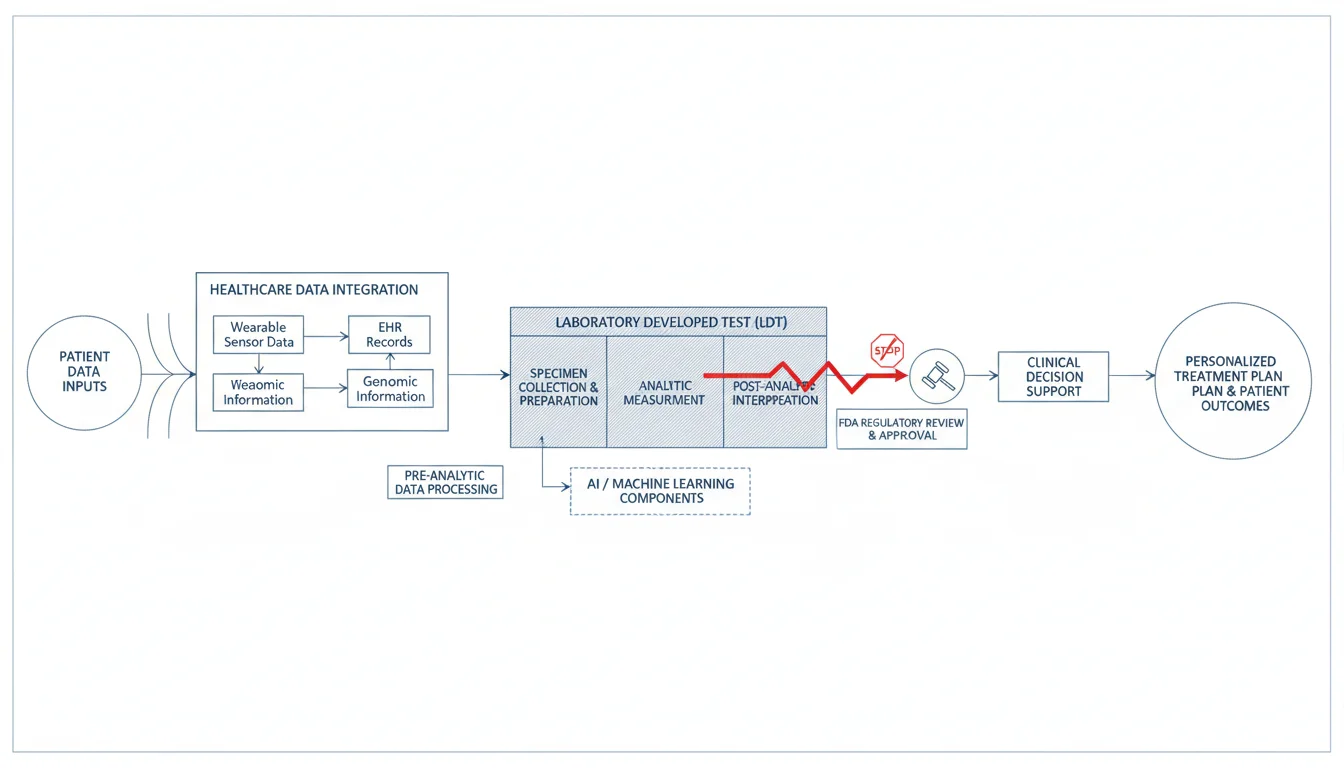
The Food and Drug Administration’s final rule regarding laboratory developed tests (LDTs), announced in April 2024, represented a seismic shift for precision medicine and the burgeoning field of AI diagnostics. However, this rule was subsequently vacated by a federal court in March 2025 and officially rescinded by the FDA in September 2025, restoring the previous regulatory field. For growth equity and late-stage venture capital investors, the initial announcement prompted a fundamental re-evaluation of risk, compliance costs, and exit timelines for portfolio companies operating in this space. Understanding the nuances of this proposed rule was paramount for accurate valuation models and strong diligence checklists at the time.
The End of Enforcement Discretion and Its Capital Implications
For decades, LDTs, which are in vitro diagnostic products manufactured and used within a single laboratory, largely operated under the FDA’s enforcement discretion, meaning they were generally not subject to the same premarket review requirements as other medical devices. This regulatory ambiguity allowed for rapid innovation, particularly in genomics and, more recently, in AI-powered diagnostics. However, the FDA LDT Final Rule, announced in April 2024, aimed to definitively phase out this discretion. The agency asserted its statutory authority under the Federal Food, Drug, and Cosmetic Act to regulate LDTs as medical devices, a position vehemently challenged by organizations like the American Clinical Laboratory Association (ACLA) ACLA legal challenge to FDA LDT rule. This challenge was successful, with a federal court vacating the rule in March 2025, leading to the FDA’s official rescission of the rule in September 2025. The immediate capital implications that were anticipated were deep. Companies that had built their business models around LDTs, using the lower barrier to market entry, would have faced significant new hurdles. The cost of achieving FDA clearance or approval, maintaining a strong Quality Management System (QMS) compliant with ISO 13485, and working through post-market surveillance would have dramatically increased operational expenses. For venture-backed diagnostic platforms, this would have translated directly into extended burn rates and potentially longer paths to profitability, impacting future fundraising rounds and in the end, exit valuations. Investors were advised to scrutinize a company’s regulatory strategy with the same rigor applied to its technological moat or commercial traction.
Working through the Four-Year Phase-In Timeline
The FDA had outlined a four-year phase-in timeline for implementing the LDT final rule, providing a staggered approach to compliance. However, this rule and its associated timeline were vacated by a federal court in March 2025 and subsequently rescinded by the FDA in September 2025, rendering this phase-in plan null and void. The following describes the proposed timeline as it was initially announced:
- Year 1 (Starting May 6, 2025): The FDA would have begun to require LDT manufacturers to comply with medical device reporting requirements and correction and removal reporting requirements. This was a foundational step, demanding immediate attention to post-market surveillance systems.
- Year 2 (Starting May 6, 2026): Quality System (QS) requirements, excluding design controls, would have become applicable. This meant laboratories would have needed to establish and maintain complete quality systems covering areas like purchasing, process control, and servicing.
- Year 3 (Starting May 6, 2027): QS requirements, including design controls, would have fully applied. This was a critical juncture, as design controls mandate rigorous documentation and validation of the design process, a significant undertaking for any diagnostic.
- Year 4 (Starting May 6, 2028): Premarket review requirements would have begun to apply to high-risk LDTs (e.g., Class III devices) and certain other LDTs, such as those that are intended to be the sole determinant for a diagnosis or treatment decision. This is where AI diagnostic platforms, particularly those making definitive determinations rather than merely offering Clinical Decision Support, would have faced their most significant regulatory challenge. This structured phase-in would have demanded a proactive approach from AI diagnostic companies. Those without existing 510(k) or De Novo clearances would have needed to embark on these pathways, which can take anywhere from 6 to 18 months or more depending on the novelty and risk profile of the device. The average compliance costs for high-complexity clinical laboratories to meet these new standards were estimated to be substantial, potentially running into the millions of dollars per year for complete premarket and post-market compliance programs industry estimates of LDT compliance costs.
Compliance Posture of Industry Leaders
Examining the compliance posture of established players in precision medicine and AI diagnostics offers valuable insights. Companies like Tempus AI, Guardant Health, and PathAI, which have already navigated elements of FDA oversight, provide a benchmark for what is to come.
- Tempus AI: As a leader in AI-enabled clinical diagnostics, Tempus AI has a mixed portfolio. While many of its offerings have historically operated as LDTs, the company has also pursued FDA clearances for specific products. Tempus AI has secured multiple FDA 510(k) clearances for AI algorithms in cardiology, including ECG-AF for atrial fibrillation risk detection (June 2024), ECG-Low EF for low LVEF detection (July 2025), and ECG-PH for pulmonary hypertension (August 2026). Also, they received 510(k) clearance for their xR IVD RNA-sequencing assay (September 2025) and an updated Tempus Pixel cardiac imaging platform (September 2025). Their strategy likely involves prioritizing certain tests for device submission while assessing the commercial viability of others under the evolving regime. The volume of FDA 510(k) or De Novo clearances obtained by major precision medicine companies like Tempus AI will become a key indicator of their readiness and strategic foresight.
- Guardant Health: Known for its liquid biopsy tests, Guardant Health has actively pursued FDA approvals for its flagship products, such as Guardant360 CDx. Guardant Health has continued to receive FDA approvals for Guardant360 CDx, including as a companion diagnostic for BRAF V600E-mutant metastatic colorectal cancer (January 2026), for Boehringer Ingelheim’s HERNEXEOS in HER2-mutant advanced non-small cell lung cancer (June 2026), and for AstraZeneca’s ETCAMAH in advanced breast cancer (September 2026). In May 2026, the company also received FDA approval for Guardant360 Liquid, its next-generation liquid biopsy panel. This proactive engagement with the FDA for Companion Diagnostics (CDx) positions them more favorably, as they have already built the infrastructure for rigorous clinical validation and regulatory submission. Their experience working through the full FDA device pathway provides a template for others.
- PathAI: This company utilizes machine learning models that integrate with clinical laboratory workflows, often providing insights for pathologists. While some of its offerings might fall under Clinical Decision Support, its more advanced diagnostic AI tools will undoubtedly be subject to increased scrutiny. PathAI received FDA 510(k) clearance for its AISight Dx digital pathology image management system for primary diagnosis in June 2025, which included a Predetermined Change Control Plan (PCCP). Its AIM-MASH AI Assist received FDA Drug Development Tool Biomarker Qualification in December 2025, and PathAssist Derm received FDA Breakthrough Device Designation in March 2026. PathAI’s focus on GMLP (Good Machine Learning Practice) principles and strong QMS implementation will be important for successful navigation of the new regulatory environment. Building an AI-Native Company with regulatory compliance baked in from inception will be a significant advantage. These companies demonstrate that securing FDA clearances is not a one-off event but an ongoing strategic imperative. For investors, understanding the proportion of a company’s revenue derived from already-cleared devices versus those operating under previous LDT frameworks is now a critical diligence item.
Adjusting Valuation Models and Diligence Checklists for AI Diagnostic Investments
The FDA’s LDT final rule had necessitated a recalibration of how investors evaluate AI diagnostic platforms. The era of rapid market entry with minimal regulatory friction was poised to end. However, with the rule’s rescission, the immediate pressures it would have created are no longer present, though the broader trend towards regulatory scrutiny for advanced diagnostics remains.
Revisiting Valuation Drivers
The anticipated impact of the LDT final rule would have elevated these factors:
- Regulatory De-risking: This would have moved from a secondary concern to a primary valuation driver. Companies with a clear, well-resourced regulatory strategy, a history of successful FDA submissions (510(k) Clearance, De Novo Classification, or even Breakthrough Device Designation), and a deep understanding of the new LDT rule would have commanded higher multiples.
- Compliance Costs: The rule would have required investors to model increased operational expenditures for quality systems, regulatory affairs personnel, clinical trials for validation, and ongoing post-market surveillance. These costs would have directly impacted profitability and cash flow projections.
- Time to Market and Exit: The regulatory pathway would have extended timelines. A previous 12-18 month path to commercialization might have stretched to 24-36 months or more if a De Novo submission had been required. This would have directly impacted the expected hold period for investments and potential exit timelines.
- Data Moat and Clinical Evidence: The strength of a company’s data moat and its ability to generate high-quality Real-World Evidence (RWE) or conduct strong key trials will be even more critical in any future regulatory environment. FDA submissions demand compelling clinical validation, making proprietary, well-curated datasets an even stronger competitive advantage.
- PCCP and Algorithmic Drift Management: For adaptive AI/ML devices, the presence of a Predetermined Change Control Plan (PCCP) will be a significant de-risker, demonstrating a clear path for model updates without constant re-submissions. Investors should also probe how companies monitor and mitigate Algorithmic Drift, a common challenge for AI models in dynamic clinical environments.
Enhancing Diligence Checklists
Investors were advised to integrate specific regulatory questions into their due diligence process in light of the proposed rule, and these remain good practices for evaluating any diagnostic platform:
- Regulatory Strategy: Does the company have a detailed plan for bringing its LDTs into compliance with the new rule? What is the estimated cost and timeline for each product line?
- QMS Maturity: Is there an established QMS, ideally ISO 13485 certified? What is the company’s track record with FDA inspections or audits?
- Clinical Validation Data: What is the quality and quantity of clinical evidence supporting the AI diagnostic’s performance? Is it sufficient for an FDA submission?
- Regulatory Team: Does the company have experienced regulatory affairs personnel, either in-house or through consultants, with a proven track record in SaMD or IVD submissions?
- IP Strategy: Beyond patent thickets, how does the company protect its algorithms and datasets, especially as regulatory submissions will require more transparency?
- Contingency Planning: What is the company’s plan if an LDT is deemed high-risk and requires a full PMA, or if a 510(k) submission faces unexpected delays? The FDA LDT Final Rule was not merely a bureaucratic adjustment. It was poised to be a structural change that would have reshaped the competitive field of AI diagnostics. However, with its rescission, the immediate impact has been averted, though the underlying debate about LDT regulation may continue. Investors who proactively adapt their frameworks to account for potential future heightened regulatory scrutiny will be best positioned to identify and back the next generation of compliance-ready leaders in this vital sector.
Methodology and Source Note
This analysis synthesizes expert legal and regulatory commentary on the FDA’s administrative rules, drawing insights from the FDA’s April 2024 LDT Final Rule document, public statements from the American Clinical Laboratory Association, the federal court decision vacating the rule in March 2025, and the FDA’s subsequent rescission of the rule in September 2025, and recent SEC disclosures from publicly traded precision medicine companies regarding regulatory risks. The aim is to provide a strategic regulatory risk analysis for late-stage venture capital and private equity investors in diagnostic AI and precision medicine.
Frequently Asked Questions
What is the current regulatory status of Laboratory Developed Tests (LDTs) following the FDA’s actions?
The FDA’s final rule regarding LDTs, announced in April 2024, was vacated by a federal court in March 2025 and officially rescinded by the FDA in September 2025. This action restored the previous regulatory landscape, meaning LDTs generally operate under the FDA’s enforcement discretion and are not subject to the same premarket review requirements as other medical devices.
How did the initial FDA LDT rule impact investor considerations for precision medicine and AI diagnostics companies?
The initial FDA LDT rule prompted investors to fundamentally re-evaluate risk, compliance costs, and exit timelines for portfolio companies. It would have significantly increased operational expenses due to requirements for FDA clearance, Quality Management Systems, and post-market surveillance. This would have led to extended burn rates and potentially longer paths to profitability, impacting fundraising and exit valuations.
What were the anticipated compliance requirements and timeline under the FDA’s LDT rule before its rescission?
The FDA had outlined a four-year phase-in timeline for compliance, which is now null and void. This timeline would have progressively introduced medical device reporting, quality system requirements (excluding and then including design controls), and finally, premarket review for high-risk LDTs. Companies would have faced substantial costs, potentially millions annually, for comprehensive compliance programs.


